Your Junk Drawer Only Needs Ten Minutes

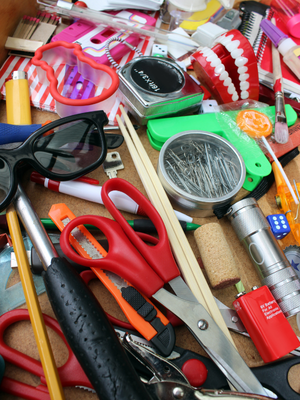
Every home has at least one. I prefer calling them the Everything Drawer. They’re the drawers that hold all the things that don’t belong anywhere else or we don’t know what to do with. The rubber bands, the dead batteries, the mystery keys, the takeout menus from 2019.

We tend to avoid them because they feel like they need to be a whole project. They don’t.

You only need ten minute and permission to be a little ruthless.

Try this:

  • Set a timer for 10 minutes.
  • Pull everything out onto a flat surface.
  • Toss anything expired, broken, or genuinely mysterious. 
  • Put back only what you’ve actually used in the last year. Remember, we’re being ruthless, and honest.
  • Everything else: find it a real home, or let it go.


You don’t need to organize what’s left. Just get the junk out of the junk drawer.

Ten minutes. Real relief.

One gentle step at a time,

Kate Fehr, Clear & Simple

Clear & Simple, Kate Fehr, Junk Drawer

The OM in YOM

Before you organize a single thing take a pause.

Take one breath. A real one. In through the nose, out through the mouth. Let your shoulders drop. Let this moment be, just for a second, enough.

YOM stands for Your Organizing Moment. And the OM is in there on purpose.

Because the organizing – the sorting, the clearing, the deciding — is not where the peace lives. The peace lives in the moment of presence. The pause. The breath. The willingness to show up gently instead of charging in with a to-do list and a deadline.

Easy Does It isn’t just a phrase. It’s a practice. And it starts here, in this moment, before anything gets done.

Try this:

Before you approach anything this week (a drawer, a pile, an inbox, a decision) stop first. Take three slow breaths. Ask yourself: what’s the easiest possible entry point right now? Not the most impressive. The easiest.

Then start there. Gently. That’s the whole practice.

One breath at a time,

Kate Fehr, Clear & Simple

Your Morning 5

Before the day begins its asking — before the emails, the texts, the requests, the list — there is a moment. Five quiet minutes that belong entirely to you.

Most of us skip it. We reach for the phone before we’ve fully arrived in the day. We start responding before we’ve even decided how we want to show up.

But those five minutes, practiced consistently, can change how your whole day feels.

Try this:

Tomorrow morning, before you look at your phone, set a timer for 5 minutes. Then choose one of these:

  • Sit quietly with your coffee or tea. Just drink it. No screens.

  • Write down three things you’re grateful for and one thing you intend to feel today.

  • Step outside for five minutes of fresh air and stillness.

  • Take five slow, deep breaths and let your body wake up gently.

That’s it. Five minutes before the world starts asking things of you.

Time, like space, benefits from a little intentional clearing. Your morning 5 is that clearing. It’s small. It’s brave. And it’s entirely yours.

A deep breath and a small step,

Kate Fehr, Clear & Simple

Clear & Simple, Kate Fehr, Morning 5

The Mail Habit That Changes Everything

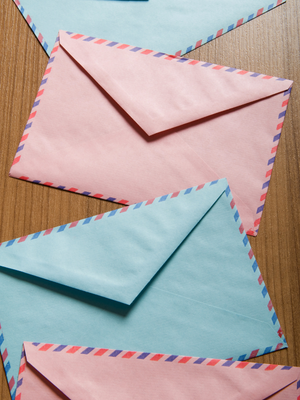
Paper clutter almost always starts the same way: the mail comes in, we glance at it, and we set it down. Then we set more on top of that. Then the pile is too tall to ignore and too overwhelming to tackle.

The good news: a simple daily habit prevents the pile from ever forming.

Try this:

Use the iRAFT Incoming step every single day. When the mail arrives (or whenever paper enters your home), it goes directly into one vertical Incoming container — not the counter, not the table, not a chair. The container.

Then once a week — even just 5 minutes — sort everything in the container into four piles:

  • READ: something worth reading? Into your reading spot.
  • ACTION: needs a response or follow-up? Into your action folder.
  • FILE: keeper for reference? Into your “to file” pile.
  • TOSS: junk, expired, irrelevant? Recycle or shred it.

That’s it. Daily plop, weekly sort. Most of what comes in is TOSS — which means the pile that used to take an hour takes minutes.

The container is the key. Give the paper one place to land, and it stops spreading everywhere else.

Here’s to paper peace,

Kate Fehr, Clear & Simple

Clear & Simple, Kate Fehr, Mail Habit

One In, One Out

Here’s a quiet truth about clutter: it rarely arrives all at once. It accumulates slowly, one item at a time, until one day we look around and wonder how it happened.

One of the gentlest ways to prevent clutter from creeping back in is a simple practice: one in, one out.

Buy a new shirt — release one. Add a new app — delete one. Bring home a new kitchen gadget — let go of one that’s been taking up space.

Try this:

This week, before you bring something new into your space — physical or digital — pause and ask: what goes out to make room for this? It doesn’t have to be a perfect match. Just a moment of intention before the addition.

Over time, this tiny pause rewires how we relate to accumulation. It’s not about deprivation. It’s about keeping your space in conversation with who you actually are right now.

Maintenance is so much easier than recovery. And one in, one out is one of the kindest things you can do for your future self.

One gentle step at a time,

Kate Fehr, Clear & Simple

Clear & Simple, Kate Fehr, One In One Out